GDG Coding Jams
Build with AI. Together.
Share
Community showcase

What the rooms shipped.

Real builds from real GDG chapters. Two hours, one pizza, one prototype. Filter by track or chapter — or scroll until something makes you want to fork it.

All builds

Showing 13–24 of 65

Food Hunting
Track 09GDG Brooklyn
Food Hunting

Food Hunt allows you to pick your food when you don't know what to eat for lunch/dinner. The website will prompt you to enter basic information such as your address, the radius of the website, and your budget. Then it will ask you select the kind of food that you want right now.

It was a very tough project to do within a short amount of time. But we managed to finish on time

TeamPulse Project Manager
Track 09GDG Brooklyn
TeamPulse Project Manager

TeamPulse streamlines team collaboration by automatically assigning tasks to the most suitable team members. It allows teams to define each member's role, skills, and weekly availability, then intelligently matches unassigned tasks based on expertise and capacity. This helps teams, especially large or remote ones, delegate work more efficiently and complete projects more effectively.

What surprised me most during development was how seamlessly role-based AI task delegation transforms project planning. Rather than just assigning tasks randomly, evaluating member skills, weekly capacity hours, and target deadlines using Gemini AI produces surprisingly nuanced, practical workload recommendations.

IBM Escape Room
Track 09GDG Brooklyn
IBM Escape Room

This project is an Autonomous AI Escape Room Engine that leverages Yann LeCun’s JEPA architecture and Gemini 2.5 Flash to create procedurally generated 3D games. It utilizes a multi-agent framework where specialized modules like the Configurator and World Model collaborate to simulate the physics and logic of your environment. Players select unique themes and scenarios which the engine then transforms into an interactive, real-time 3D world using the Three.js library. The system moves beyond sim

Mapping Yann LeCun’s JEPA paper directly to game master mechanics revealed that modular brain agents (Configurator, World Model, Critic, Actor) naturally eliminate AI hallucinations by simulating spatial physics before narrative generation. We were surprised by how seamlessly an LLM orchestrator could generate real-time 3D spatial JSON protocols while maintaining strict object permanence across ga

Pocket Maps
Track 09GDG Brooklyn
Pocket Maps

Pocket Map is a mood-driven location discovery app where users snap and pin cozy hidden gems to a shared map. Guided by Pickles, an empathetic AI raccoon companion, users describe how they feel—and Pickles analyzes community photos to match their exact vibe with the perfect local sanctuary.

We are really surprised by the capabilities and speed of Google AI Studio.

Velocity Neon 3D
Track 09GDG Brooklyn
Velocity Neon 3D

The project involved creating an immersive 3D racing game set in a captivating sci-fi universe. Players find themselves in a futuristic landscape filled with neon-lit cityscapes and breathtaking alien terrains.

Google Pro is an advanced and versatile modeling tool that allows users to quickly prototype and craft immersive 3D environments. With its intuitive interface and robust features, you can seamlessly bring your creative visions to life, transforming ideas into vibrant digital landscapes almost instantly.

Vibe Style
Track 01GDG Brooklyn
Vibe Style

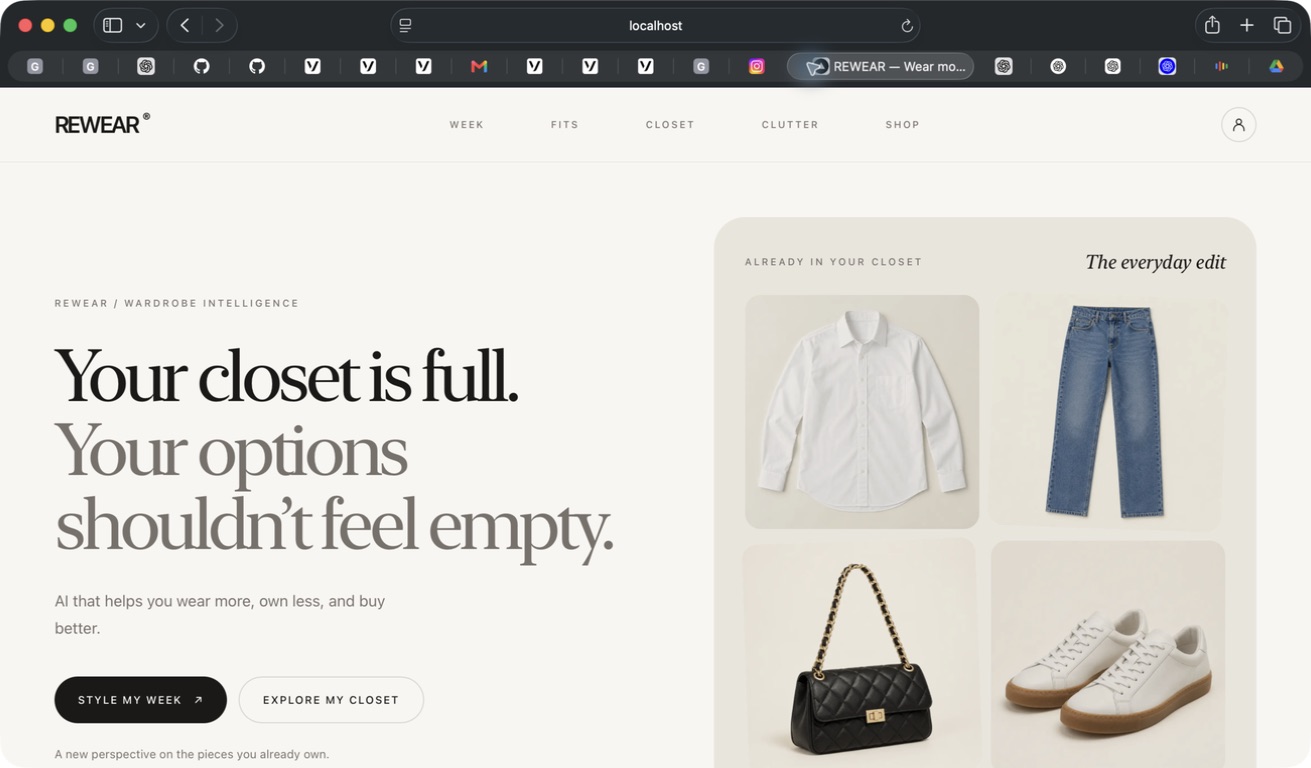
This app is a conversational AI stylist for your closet: it asks about your mood, who you’re dressing for, and the occasion (or trip details), then generates complete, head-to-toe outfits pulled from your own digitized wardrobe — shown as e-commerce-style look cards with Add to Bag, Favorite, and Customize options. It also handles multi-person trip packing (partner/family), weather-aware travel essentials, and destination-only shopping suggestions, all wrapped in a friendly “best friend stylist”

I assumed the hard part would be the styling logic. It wasn’t, the hard part was getting the AI to remember it already knew you were shopping solo, and to stop asking.

VibeTrav
Track 09GDG Brooklyn
VibeTrav

VibeTrav is a medical tourism platform that helps people discover and plan authentic healthcare journeys, with a dedicated focus on Ayurveda. The new Ayurveda Centers feature lets users explore highly recommended treatment centers first, then browse a wider directory with powerful filters by location, treatment type, and budget. It is designed for international patients seeking trusted, high-quality Ayurvedic care without the usual research overwhelm.

What surprised me most was how strongly users wanted a clear separation between “highly recommended” centers and the broader list. Prioritizing quality over quantity proved more important than simply showing a large number of options.

TourCare
Track 09GDG Brooklyn
TourCare

TourCare NYC is an AI-powered travel assistant designed to help visitors and residents explore New York City through personalized, real-time recommendations. The solution combines conversational AI, location-aware intelligence, and personalized itinerary generation to create a seamless travel experience. Users can ask natural language questions such as: "What are the best family-friendly attractions near me?" "Plan a half-day itinerary in Manhattan." "Suggest accessible attractions within 30 m

Team work, AI capabilities, Real word problem

Side Quest NYC
Track 09GDG Brooklyn
Side Quest NYC

SideQuest NYC is a personalized event discovery app for people who want spontaneous, local things to do without digging through dozens of websites. Users can search by voice or filters like interest, budget, location, and vibe to find nearby events happening now or in the next few days. The cool part is that it understands requests like “find something low-key and not too crowded” and turns them into tailored recommendations.

One of the biggest challenges was accurately scraping event locations and times from multiple websites, since each source formatted its data differently. Normalizing inconsistent dates, addresses, and missing information made it difficult to produce reliable real-time recommendations.

Art Attack
Track 09GDG Brooklyn
Art Attack

Art Attack is a real-time two-player fighting game where each player draws their own character, then AI turns the sketch into a fighter with stats, abilities, a sprite, and an arena theme. Players can join from another device, lock in their characters, watch the battle intro, and fight live in the same arena. The cool part is that every match begins with something completely original that the players created themselves.

I was surprised by how many small real-time state changes have to stay perfectly synced for the experience to feel seamless. A single missed update after character lock-in could prevent the entire match from reaching the battlefield, which made reliable multiplayer flow just as important as the AI character generation.

SafeLink
Track 09GDG Brooklyn
SafeLink

SafeLink is a one-tap emergency app for anyone who feels unsafe on the street or gets caught in an accident. It starts recording and tracking your location the moment you open it, then lets you send that location and footage to police, ambulance, or fire with a single button — or dial 911 directly. Gemini turns whatever you can manage to type into a structured dispatch report, so responders get clear information even when you can't explain the situation yourself.

How much of "send a live stream to the police" turns out to be impossible in a browser. There's no endpoint to send to, and phones won't even record both cameras at once — so most of the work became figuring out what was real versus what I had to honestly label as simulated.

Film Room
Track 01GDG Brooklyn
Film Room

Film Room turns a phone video of one pickup basketball possession into a coach's breakdown — annotated video, real spatial analytics, and a bridge to the NBA action it resembles — so you learn to read the game by studying your own film.

The model turned out to be far better at reading basketball than at telling my friends apart — it diagnosed the blown switch instantly but couldn't reliably say who blew it, which forced me to design the whole system so the tactical read still holds when player identification fails.